



Click Below to Get the Code

Browse, clone, and build from real-world templates powered by Harper.
News
GitHub Logo

Harper is Officially Open Source

Harper announced at JSConf North America 2025 that it’s open-sourcing its composable full-stack web application platform. The distributed system unifies database, cache, messaging, and runtime for ultra-low-latency performance, fostering open innovation and wider Node.js community adoption.
Announcement
News
Announcement

Harper is Officially Open Source

Harper
at Harper
October 14, 2025
Harper
at Harper
October 14, 2025
Harper
at Harper
October 14, 2025
October 14, 2025
Harper announced at JSConf North America 2025 that it’s open-sourcing its composable full-stack web application platform. The distributed system unifies database, cache, messaging, and runtime for ultra-low-latency performance, fostering open innovation and wider Node.js community adoption.
Harper

DENVER, Oct. 14, 2025 / -- Today, at the JSConf North America 2025, Harper announced it has open sourced its core technology, a composable full-stack web application platform. The highly extensible, distributed system fuses database, cache, messaging, and Node.js runtime into a single server-side process — delivering unmatched performance for data-intensive, latency-sensitive applications. By making its performance platform publicly available, Harper aims to support wider Node.js developer adoption of its platform, drive innovation at the edge, and foster a more open ecosystem of community contribution.

Harper's decision to open source its foundational technology comes as the composable platform has already seen strong enterprise traction. Harper is battle-tested in production, currently powering nearly two percent of global e-commerce purchases and other high-traffic web properties with ultra-low latency. Harper customers have reported dramatic performance gains – including server response times under one millisecond in scenarios where traditional stacks took over 100 milliseconds, and web pages loading up to 7x faster with Largest Contentful Paint (LCP) metrics up to 30x faster than previous architectures. In turn, these performance gains help Fortune 100 e-commerce companies and destination websites drive greater engagement, boost conversion rates, and fuel revenue growth.

Harper is a Member of the OpenJS Foundation

These improvements stem from Harper's cloud and edge-native unified architecture, which collapses multiple layers of the web stack into one process that delivers millisecond response times across globally distributed systems. By keeping data at the edge and eliminating network hops and serialization between separate database, cache, and application tiers, Harper removes the usual inefficiencies and achieves extremely low response times. As part of this initiative, Harper is releasing the source code under the Apache 2.0 license. This choice ensures maximum flexibility allowing any organization to deploy Harper's engine in their own environment, integrate with existing systems, and build commercial solutions on top of it.

"Open sourcing our technology is a way for us to collaborate and build alongside the developer community, and particularly the Node.js community, who have made Harper as it is today possible," said Stephen Goldberg, CEO and Cofounder of Harper. "By releasing our source, we're putting Harper in the hands of skilled web architects and developers around the world, inviting them to help shape the future of high-speed, edge-native applications. We're excited to see what the community will create and how they'll push the boundaries of what Harper enables while staying true to our core values of openness, performance, and reliability."
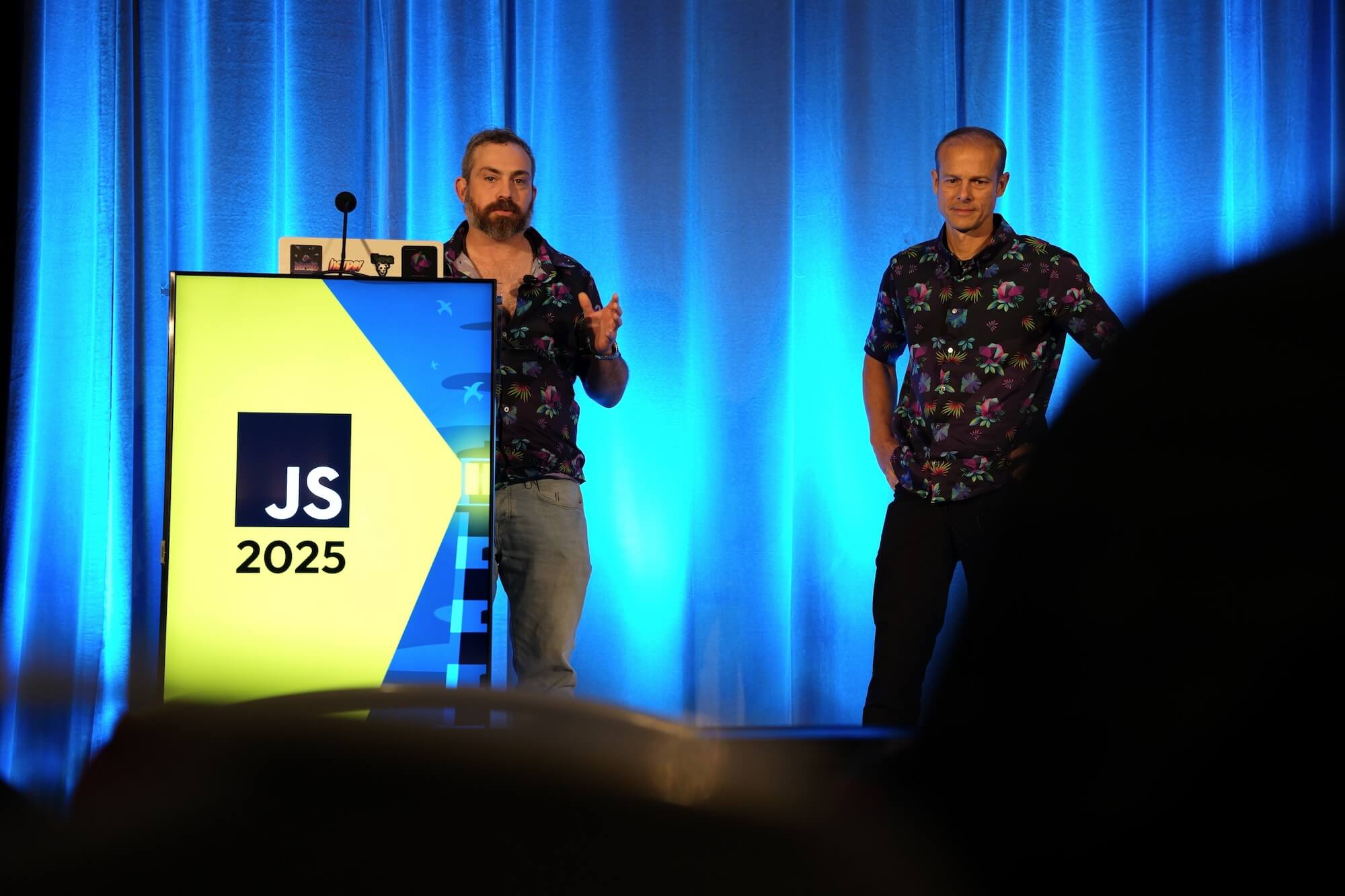
Stephen Goldberg, CEO and Co-Founder, and Kris Zyp, SVP of Engineering at Harper, announce on stage at JS Conf 2025 that Harper is now an open source project. (Photo credit: Dawson Toth)

This open-source release marks a significant milestone in Harper's strategy to drive innovation through openness. Harper hopes to accelerate the development of new use cases in edge computing and distributed web applications, leveraging community-driven ideas and feedback. The company will continue to offer enterprise-grade support and managed services for organizations that require production assistance, ensuring that both OpenJS community users and enterprise customers benefit from Harper's ongoing evolution.

To get started, developers worldwide are encouraged to visit the Harper repository available on GitHub, run the engine in their own environments leveraging Harper's free UI, and join Harper's community forums and discord channels to collaborate. For additional documentation and examples, visit harper.fast/start

About Harper
Harper enables companies to achieve web speed, scale, and performance levels never seen before – with customers reporting as much as 7x faster page loads, nearly 30x faster LCPs, and more than 25 percent year-over-year revenue growth. Its innovative, backend technology collapses the traditional software stack into one highly-efficient, low-latency system with limitless horizontal scale. By combining data, application, cache, and messaging functions into a single process, on a single server, Harper eliminates the constraints and complexity of building, distributing, and maintaining data-dependent applications. In doing so, Harper unlocks new revenue streams for its clients and inspires dev teams to innovate without compromise. To learn more, visit harper.fast/start

Media Contact:
Aleks Haugom
Senior Manager of GTM
aleks@harperdb.io

DENVER, Oct. 14, 2025 / -- Today, at the JSConf North America 2025, Harper announced it has open sourced its core technology, a composable full-stack web application platform. The highly extensible, distributed system fuses database, cache, messaging, and Node.js runtime into a single server-side process — delivering unmatched performance for data-intensive, latency-sensitive applications. By making its performance platform publicly available, Harper aims to support wider Node.js developer adoption of its platform, drive innovation at the edge, and foster a more open ecosystem of community contribution.

Harper's decision to open source its foundational technology comes as the composable platform has already seen strong enterprise traction. Harper is battle-tested in production, currently powering nearly two percent of global e-commerce purchases and other high-traffic web properties with ultra-low latency. Harper customers have reported dramatic performance gains – including server response times under one millisecond in scenarios where traditional stacks took over 100 milliseconds, and web pages loading up to 7x faster with Largest Contentful Paint (LCP) metrics up to 30x faster than previous architectures. In turn, these performance gains help Fortune 100 e-commerce companies and destination websites drive greater engagement, boost conversion rates, and fuel revenue growth.

Harper is a Member of the OpenJS Foundation

These improvements stem from Harper's cloud and edge-native unified architecture, which collapses multiple layers of the web stack into one process that delivers millisecond response times across globally distributed systems. By keeping data at the edge and eliminating network hops and serialization between separate database, cache, and application tiers, Harper removes the usual inefficiencies and achieves extremely low response times. As part of this initiative, Harper is releasing the source code under the Apache 2.0 license. This choice ensures maximum flexibility allowing any organization to deploy Harper's engine in their own environment, integrate with existing systems, and build commercial solutions on top of it.

"Open sourcing our technology is a way for us to collaborate and build alongside the developer community, and particularly the Node.js community, who have made Harper as it is today possible," said Stephen Goldberg, CEO and Cofounder of Harper. "By releasing our source, we're putting Harper in the hands of skilled web architects and developers around the world, inviting them to help shape the future of high-speed, edge-native applications. We're excited to see what the community will create and how they'll push the boundaries of what Harper enables while staying true to our core values of openness, performance, and reliability."

Stephen Goldberg, CEO and Co-Founder, and Kris Zyp, SVP of Engineering at Harper, announce on stage at JS Conf 2025 that Harper is now an open source project. (Photo credit: Dawson Toth)

This open-source release marks a significant milestone in Harper's strategy to drive innovation through openness. Harper hopes to accelerate the development of new use cases in edge computing and distributed web applications, leveraging community-driven ideas and feedback. The company will continue to offer enterprise-grade support and managed services for organizations that require production assistance, ensuring that both OpenJS community users and enterprise customers benefit from Harper's ongoing evolution.

To get started, developers worldwide are encouraged to visit the Harper repository available on GitHub, run the engine in their own environments leveraging Harper's free UI, and join Harper's community forums and discord channels to collaborate. For additional documentation and examples, visit harper.fast/start

About Harper
Harper enables companies to achieve web speed, scale, and performance levels never seen before – with customers reporting as much as 7x faster page loads, nearly 30x faster LCPs, and more than 25 percent year-over-year revenue growth. Its innovative, backend technology collapses the traditional software stack into one highly-efficient, low-latency system with limitless horizontal scale. By combining data, application, cache, and messaging functions into a single process, on a single server, Harper eliminates the constraints and complexity of building, distributing, and maintaining data-dependent applications. In doing so, Harper unlocks new revenue streams for its clients and inspires dev teams to innovate without compromise. To learn more, visit harper.fast/start

Media Contact:
Aleks Haugom
Senior Manager of GTM
aleks@harperdb.io

Harper announced at JSConf North America 2025 that it’s open-sourcing its composable full-stack web application platform. The distributed system unifies database, cache, messaging, and runtime for ultra-low-latency performance, fostering open innovation and wider Node.js community adoption.

Download

White arrow pointing right
Harper announced at JSConf North America 2025 that it’s open-sourcing its composable full-stack web application platform. The distributed system unifies database, cache, messaging, and runtime for ultra-low-latency performance, fostering open innovation and wider Node.js community adoption.

Download

White arrow pointing right
Harper announced at JSConf North America 2025 that it’s open-sourcing its composable full-stack web application platform. The distributed system unifies database, cache, messaging, and runtime for ultra-low-latency performance, fostering open innovation and wider Node.js community adoption.

Download

White arrow pointing right

Explore Recent Resources

News
GitHub Logo

Harper Recognized as an Honorable Mention in the 2026 Gartner® Magic Quadrant™ for Cloud-Native Application Platforms

Harper’s inclusion highlights a broader shift toward integrated cloud-native platforms that unify data, caching, messaging, and application logic. The article explains how Harper’s distributed runtime and managed infrastructure reduce operational complexity, improve performance, and support modern applications and AI agents that require fast, reliable access to state, events, and tools.
Announcement
News
Harper’s inclusion highlights a broader shift toward integrated cloud-native platforms that unify data, caching, messaging, and application logic. The article explains how Harper’s distributed runtime and managed infrastructure reduce operational complexity, improve performance, and support modern applications and AI agents that require fast, reliable access to state, events, and tools.
Person with short dark hair and moustache, wearing a colorful plaid shirt, smiling outdoors in a forested mountain landscape.
Aleks Haugom
Senior Manager of GTM
News

Harper Recognized as an Honorable Mention in the 2026 Gartner® Magic Quadrant™ for Cloud-Native Application Platforms

Harper’s inclusion highlights a broader shift toward integrated cloud-native platforms that unify data, caching, messaging, and application logic. The article explains how Harper’s distributed runtime and managed infrastructure reduce operational complexity, improve performance, and support modern applications and AI agents that require fast, reliable access to state, events, and tools.
Aleks Haugom
Aug 2026
News

Harper Recognized as an Honorable Mention in the 2026 Gartner® Magic Quadrant™ for Cloud-Native Application Platforms

Harper’s inclusion highlights a broader shift toward integrated cloud-native platforms that unify data, caching, messaging, and application logic. The article explains how Harper’s distributed runtime and managed infrastructure reduce operational complexity, improve performance, and support modern applications and AI agents that require fast, reliable access to state, events, and tools.
Aleks Haugom
News

Harper Recognized as an Honorable Mention in the 2026 Gartner® Magic Quadrant™ for Cloud-Native Application Platforms

Harper’s inclusion highlights a broader shift toward integrated cloud-native platforms that unify data, caching, messaging, and application logic. The article explains how Harper’s distributed runtime and managed infrastructure reduce operational complexity, improve performance, and support modern applications and AI agents that require fast, reliable access to state, events, and tools.
Aleks Haugom
News
GitHub Logo

Harper 5.2: More Throughput per Node, Fewer Systems Around It

Harper 5.2 helps architecture and platform leaders improve performance, control infrastructure costs, secure production workloads, and reduce operational complexity by bringing faster data access, agentic capabilities, scheduling, backup, routing, and protection into one unified runtime.
Product Update
News
Harper 5.2 helps architecture and platform leaders improve performance, control infrastructure costs, secure production workloads, and reduce operational complexity by bringing faster data access, agentic capabilities, scheduling, backup, routing, and protection into one unified runtime.
Person with short dark hair and moustache, wearing a colorful plaid shirt, smiling outdoors in a forested mountain landscape.
Aleks Haugom
Senior Manager of GTM
News

Harper 5.2: More Throughput per Node, Fewer Systems Around It

Harper 5.2 helps architecture and platform leaders improve performance, control infrastructure costs, secure production workloads, and reduce operational complexity by bringing faster data access, agentic capabilities, scheduling, backup, routing, and protection into one unified runtime.
Aleks Haugom
Aug 2026
News

Harper 5.2: More Throughput per Node, Fewer Systems Around It

Harper 5.2 helps architecture and platform leaders improve performance, control infrastructure costs, secure production workloads, and reduce operational complexity by bringing faster data access, agentic capabilities, scheduling, backup, routing, and protection into one unified runtime.
Aleks Haugom
News

Harper 5.2: More Throughput per Node, Fewer Systems Around It

Harper 5.2 helps architecture and platform leaders improve performance, control infrastructure costs, secure production workloads, and reduce operational complexity by bringing faster data access, agentic capabilities, scheduling, backup, routing, and protection into one unified runtime.
Aleks Haugom
Blog
GitHub Logo

5 Architectures for Web Personalization

Personalization is a data-delivery problem. Every architectural choice reduces to two distances: compute to user, and compute to fresh data. This piece maps five real architectures against both axes, scored on a concrete retailer workload where stale or slow data breaks the business.
Blog
Personalization is a data-delivery problem. Every architectural choice reduces to two distances: compute to user, and compute to fresh data. This piece maps five real architectures against both axes, scored on a concrete retailer workload where stale or slow data breaks the business.
Person with short dark hair and moustache, wearing a colorful plaid shirt, smiling outdoors in a forested mountain landscape.
Aleks Haugom
Senior Manager of GTM
Blog

5 Architectures for Web Personalization

Personalization is a data-delivery problem. Every architectural choice reduces to two distances: compute to user, and compute to fresh data. This piece maps five real architectures against both axes, scored on a concrete retailer workload where stale or slow data breaks the business.
Aleks Haugom
Jul 2026
Blog

5 Architectures for Web Personalization

Personalization is a data-delivery problem. Every architectural choice reduces to two distances: compute to user, and compute to fresh data. This piece maps five real architectures against both axes, scored on a concrete retailer workload where stale or slow data breaks the business.
Aleks Haugom
Blog

5 Architectures for Web Personalization

Personalization is a data-delivery problem. Every architectural choice reduces to two distances: compute to user, and compute to fresh data. This piece maps five real architectures against both axes, scored on a concrete retailer workload where stale or slow data breaks the business.
Aleks Haugom